Advice
Scarifying, coring or top dressing? What your tired lawn actually needs
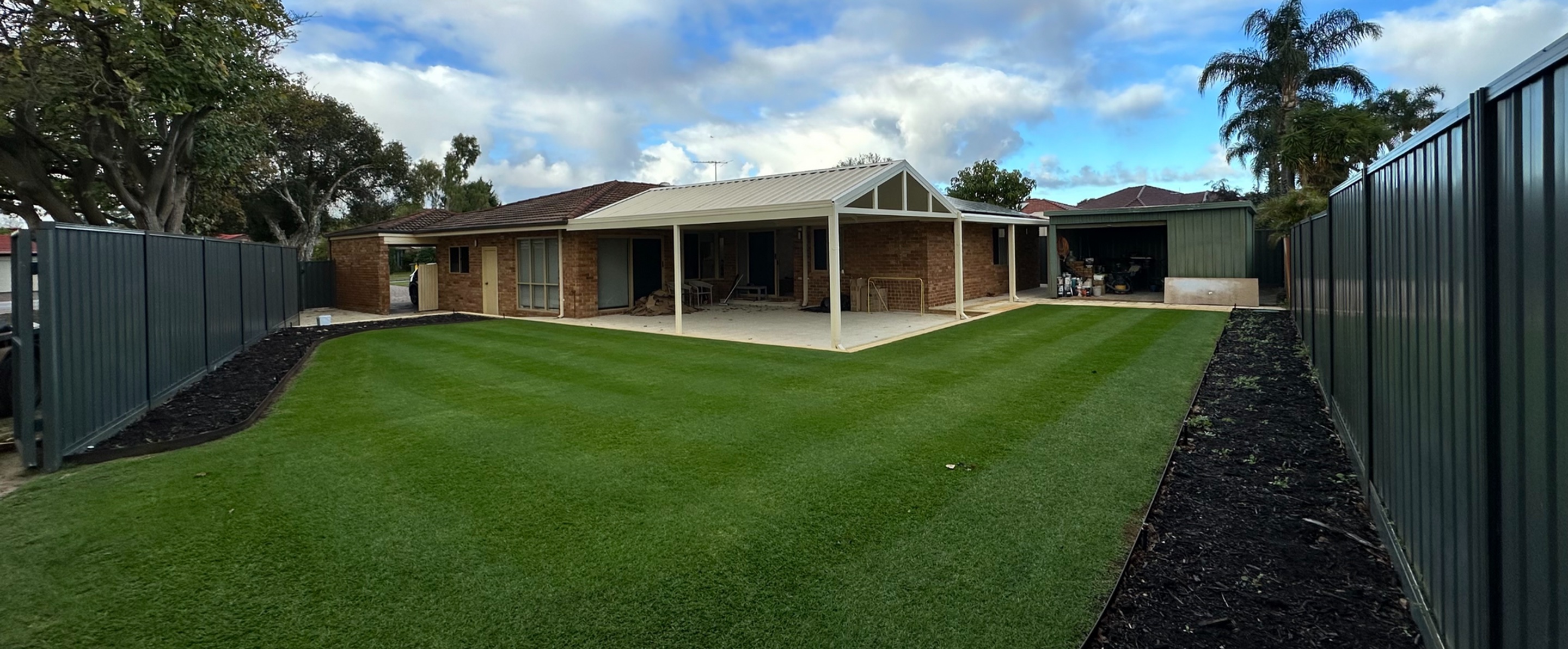
They get lumped together as renovation, but they solve three completely different problems. Doing the wrong one is a waste of a season.
2 September 2026 · 5 min read · Thirsty Lawn Solutions
Ask around about fixing a tired lawn and you'll get three words thrown at you as if they're interchangeable. Scarify it. Core it. Top dress it.
They're not interchangeable. They're three different machines solving three different problems, and picking the wrong one means you've spent a spring on something your lawn didn't need. Sometimes a lawn needs all three, in a particular order. Often it needs one.
Here's how to tell them apart, and how to work out which one is yours.
Scarifying: too much thatch
Thatch is the layer of dead runners, stems and clippings that builds up between the green leaf and the soil. A thin layer is fine and even useful. A thick one is a problem, because water and feed stop reaching the soil and start sitting in a spongy mat instead.
Couch and kikuyu are the usual offenders in Perth. They spread by runner, and after a few seasons of good growth there's a serious amount of old material down there.
Signs it's thatch: the lawn feels springy or bouncy underfoot, like walking on carpet underlay. The mower sinks in and scalps easily. You can push a finger down and hit a dense brown mat before you hit soil. Water seems to disappear without the soil ever getting wet.
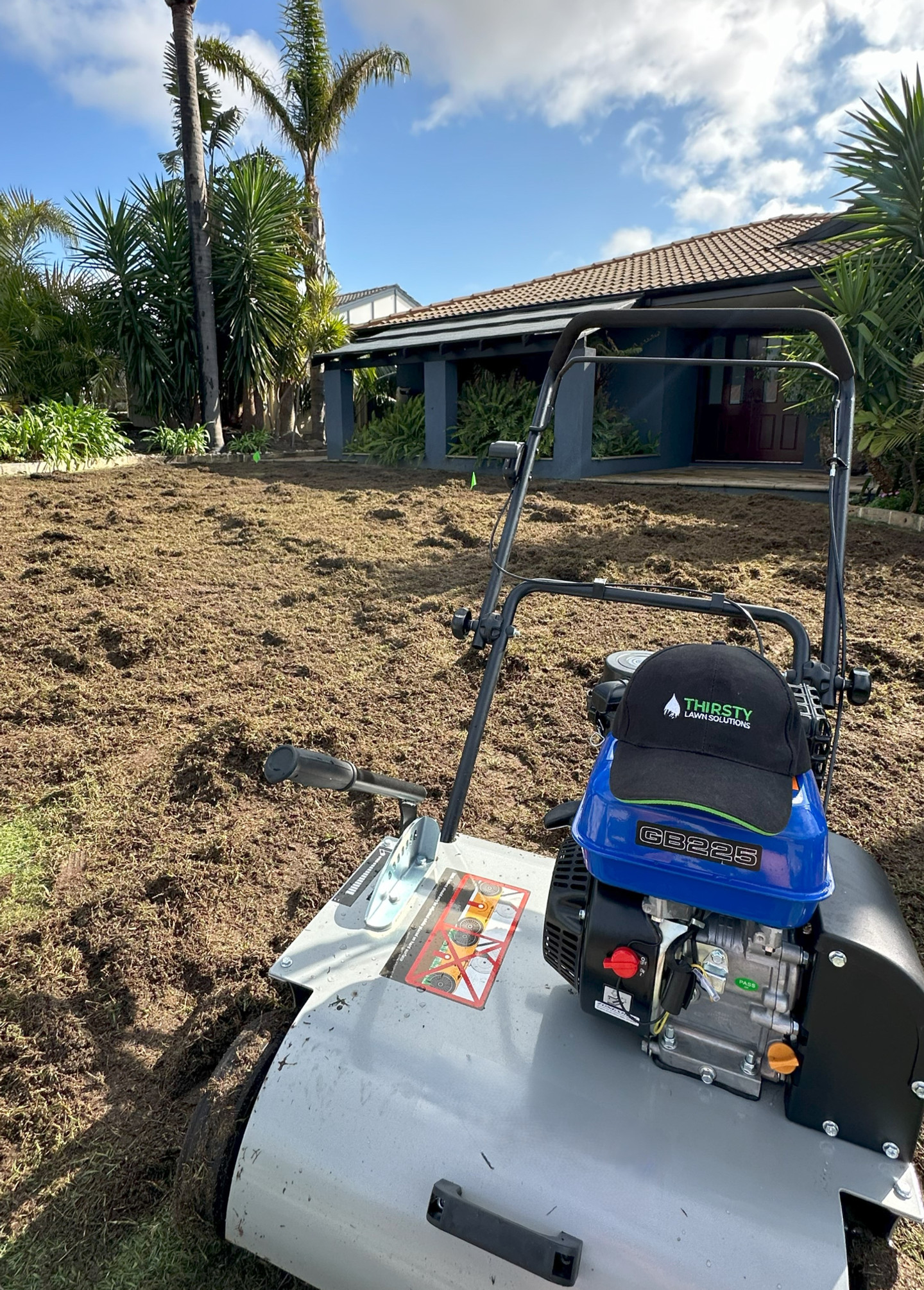
What scarifying does: a vertical blade cuts down through the lawn and rips that mat out. It also slices the runners, which sounds brutal but triggers a wave of fresh lateral growth from the cut points. It looks like a crime scene for a fortnight and then comes back thicker than it was.
When: warm soil and active growth only, so September to March. The lawn needs to be able to recover fast.
Core aeration: compacted soil
Compaction is the opposite problem. Instead of too much material on top, the soil underneath has been squeezed together so tightly that air, water and nutrients can't move through it. Roots can't push into it either, so they stay shallow and the lawn lives on a knife edge all summer.
Kids, dogs, cricket, foot traffic, a trailer parked on the verge, and Perth's own sand settling over time all do it.
Signs it's compaction: the ground feels hard underfoot, especially compared to the garden beds. Water pools or runs off rather than soaking in. The lawn thins along paths and shortcuts. It looks flat and tired no matter how much you feed it.
What core aeration does: it pulls thousands of small plugs of soil right out of the lawn and leaves the holes behind. Air, water and feed drop straight into the root zone, and the roots get somewhere to expand into. It is not the same as spiking, which just pushes soil sideways and compacts it further.
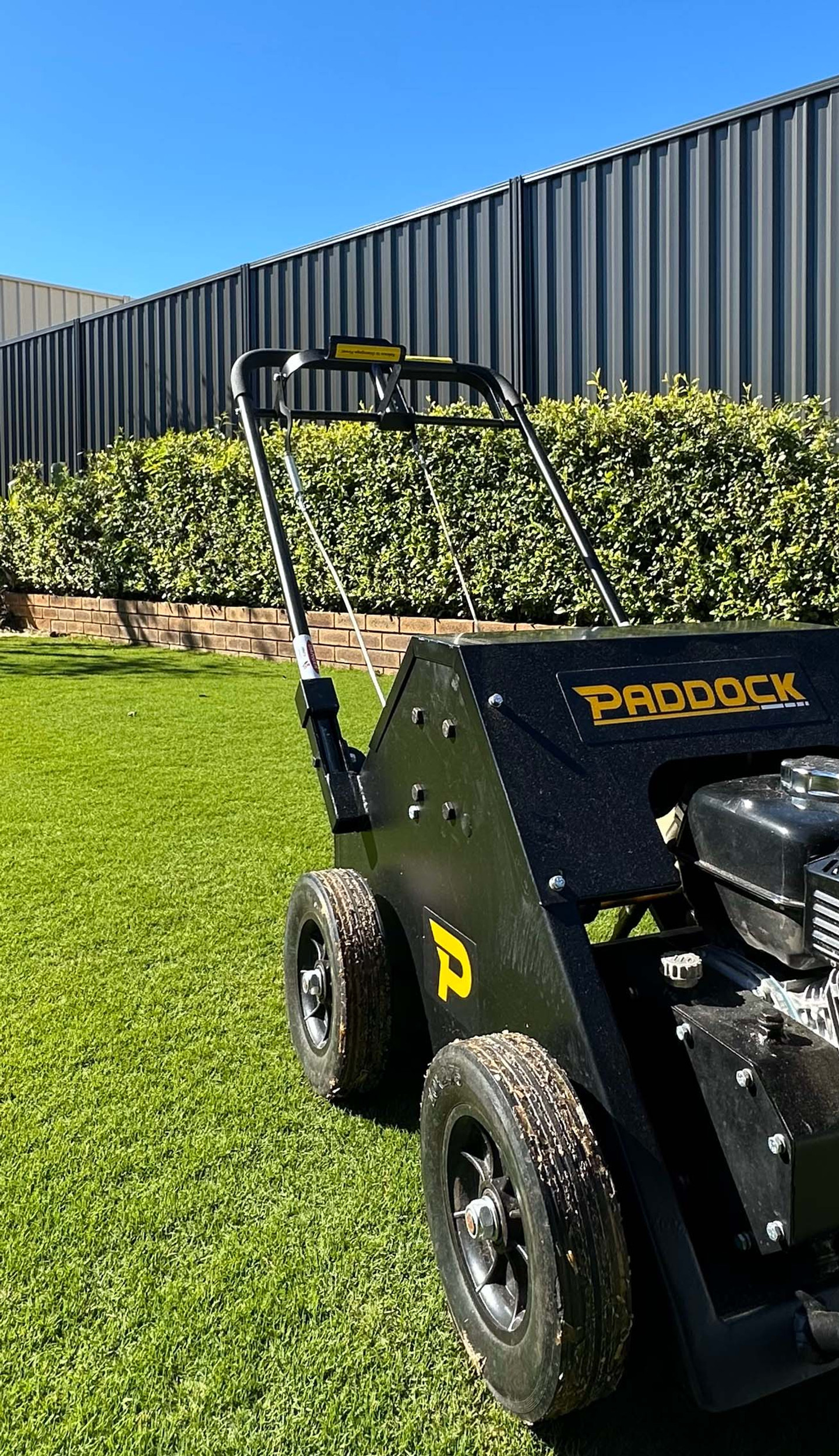
When: spring is ideal, so the lawn knits back over quickly. There's a full breakdown in our core aeration guide, and the service itself is on our core aeration packages page.
Top dressing: bad soil and a bumpy surface
This one isn't about removing anything. It's about adding.
Perth's grey sand is low in clay and low in organic matter, which means it holds very little water and very little nutrition. Add a lawn that's gone bumpy from settling, dogs, or a retic trench, and you've got the case for top dressing.
Signs it's the soil: the lawn dries out within a day or two of watering. It's hungry no matter how often you feed. The surface is uneven enough that the mower scalps the high spots. The soil looks like something off a beach.
What top dressing does: a thin layer of quality soil blend is spread over the lawn and worked in. It fills the low spots and levels the surface, and over a few applications it genuinely changes the profile underneath, turning hungry sand into something that holds a drink. It's the slow fix, and it's the one that compounds. See lawn top dressing for how we run it.
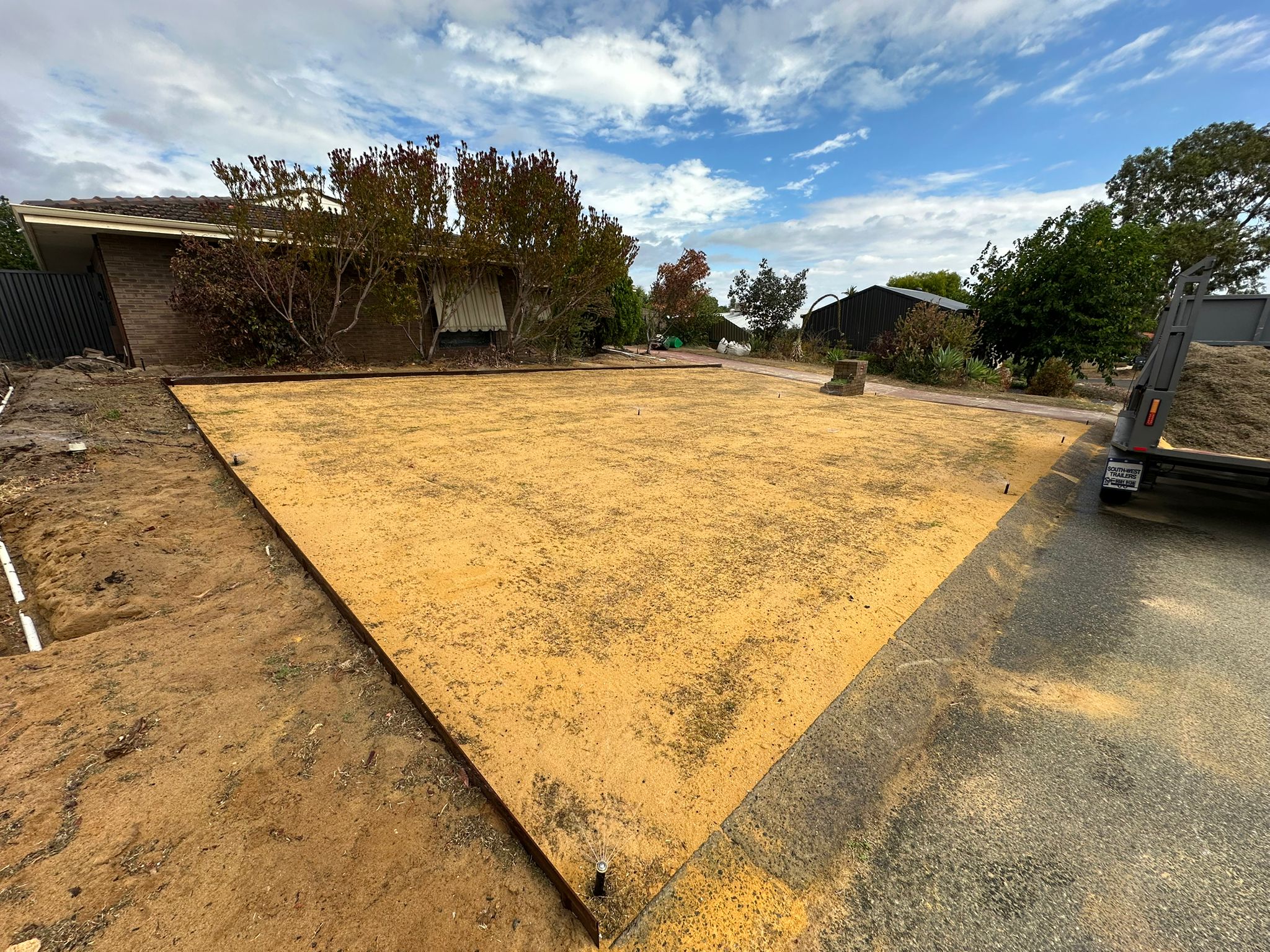
When: during active growth, so the grass can grow up through the new layer. Never so thick that it smothers the lawn.
So which one do you need?
Run through it like this.
- Springy underfoot, mower scalping, brown mat under the green? Scarify.
- Hard ground, water running off, worn tracks, flat and tired? Core aerate.
- Dries out constantly, always hungry, bumpy surface, pure sand? Top dress.
- Two or three of those at once? That's a renovation.
That last one is more common than people expect, because the problems feed each other. Compacted soil sheds water, the lawn thins, thin lawn puts down more runner than leaf, and thatch builds while the surface goes uneven. Which is why a proper lawn renovation usually runs them in sequence: scarify to clear the thatch, core to open the profile, top dress to level and rebuild, then feed and water it back into a thick lawn.
Do it in that order and each step makes the next one work harder. Do them at random and you can undo one with another.
Don't leave it until it's hot
All three of these need warm soil and a lawn that's actively growing, which puts the window at September to March. They also need recovery time before the worst of summer, so the front of the season is worth more than the back of it. The renovation calendar fills from September, and it fills from the front.
If you're not sure which of the three your lawn is asking for, that's a fair question and it's usually obvious once someone's had a look at it. Send us a photo and a description through the quote form and we'll reply within one business day and tell you straight, tailored to your turf, not a template.
Want your lawn handled properly?
Get a free, no-obligation quote and we’ll get back to you, usually within one business day.