Advice
Perth watering days: how to keep a lawn green on two days a week
Two days a week sounds impossible until you realise most lawns waste both of them. The roster isn't the problem.
2 September 2026 · 5 min read · Thirsty Lawn Solutions
Every spring we hear the same thing. Two watering days isn't enough, the lawn cooks by January, and there's nothing you can do about it short of moving states.
We'd push back on that. Plenty of lawns south of the river hold colour right through a Perth summer on the standard roster. The ones that don't are almost never short of water days. They're short of water that actually goes into the ground.
Here's how the rules work, and how to make two days do the job of four.
What the rules actually say
Perth runs a two day a week sprinkler roster, and your days are set by your house number. You can water once on each of those days, either before 9am or after 6pm. You can look up your days in about ten seconds on the Water Corporation site.
A few things people get caught by:
- The winter sprinkler switch off runs 1 June to 31 August every year, so sprinklers are back on from 1 September. It covers Perth, the South West and parts of the Great Southern.
- Garden bores in Perth and Mandurah run on the same roster and the same times as scheme water. A bore is not a loophole.
- Inspectors do actually turn up, and breaches carry on the spot fines.
- New turf is different. If you're laying a fresh lawn you can apply for a watering exemption, and you need to apply on the day it goes down to get the full period. More on that in our guide to caring for new turf.
That's the whole framework. Everything else is technique.
Two long drinks beat six short ones
This is the part that changes lawns.
A short watering wets the top couple of centimetres and no further. The moisture sits shallow, the roots follow it up towards the surface, and you end up with a lawn whose entire root system lives in the hottest, driest, most exposed layer of the profile. Miss a day and it wilts, because there's nothing underneath holding it up.
A long, deep soak pushes moisture well down into the sand. The roots chase it, the root zone gets deeper, and the lawn builds its own buffer against a 38 degree day. That is exactly what a two day roster is built to encourage. You're not being rationed, you're being pushed into better watering.
So on your two days, water properly. Run each station long enough that the soil is wet well below the surface, not just dark on top.
If the water won't go in, the roster is irrelevant
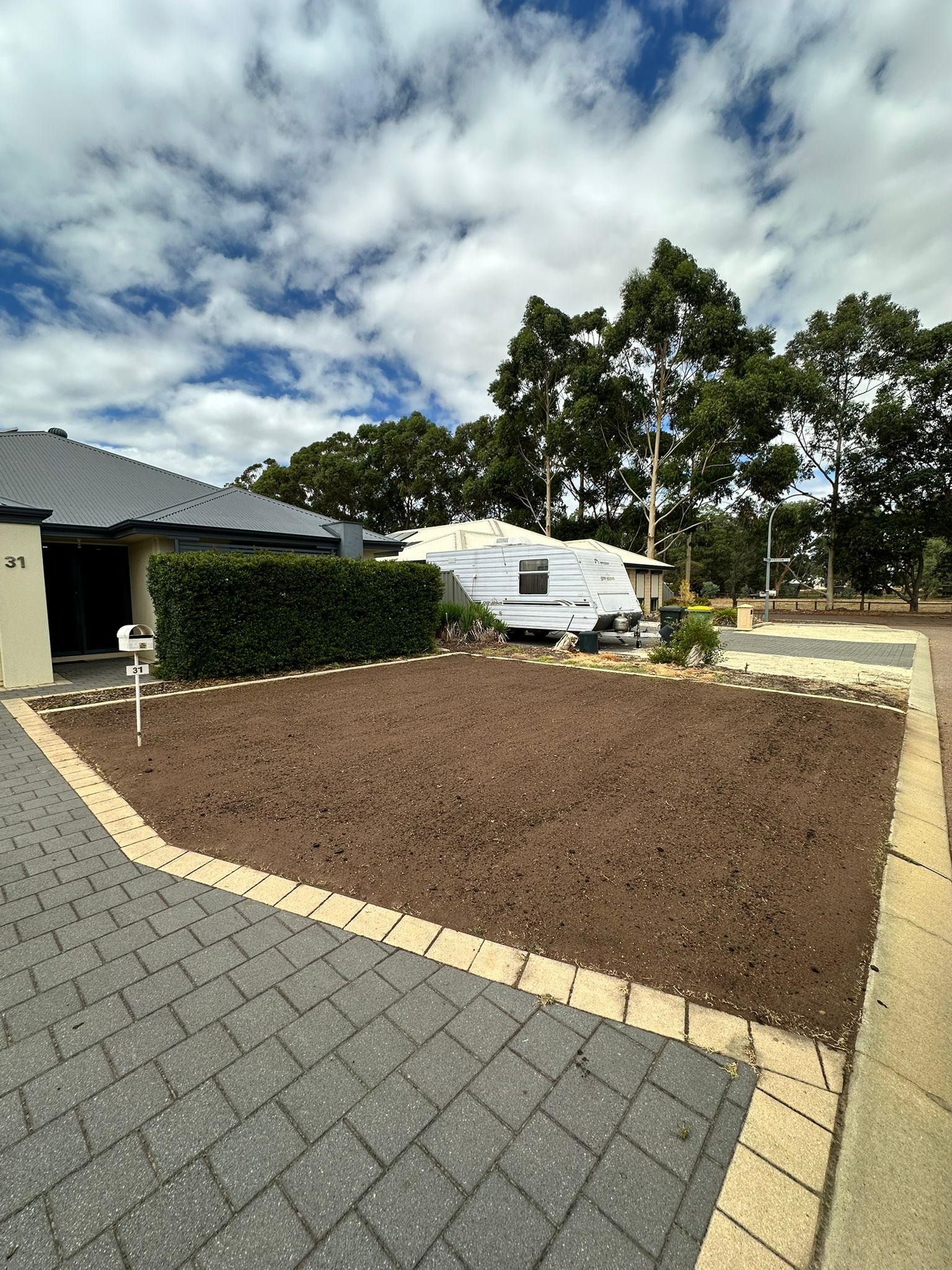
Here's the Perth catch. You can water deeply all you like, but if the soil is repelling water it's going nowhere.
Our sand is old, low in clay and low in organic matter, and once it dries right out it develops a waxy coating that sheds water instead of absorbing it. You see it as beading on the surface, or water running sideways to a garden bed or the driveway while the turf stays thirsty. Lift a corner of the lawn and the soil underneath is dry grey powder.
That's hydrophobic soil, and it's the single most common reason a Perth lawn dies of thirst on a fully working retic. A soil wetting agent breaks the coating down so water can soak in and spread evenly. It needs doing on a seasonal schedule rather than once, because repellency creeps back as the profile dries out, which is why it's built into our lawn aftercare programs. We've gone deep on the whole problem in why Perth's sandy soil repels water.
Hard ground sheds water too
If water pools or runs off in the same spots every time, especially where people walk, compaction is doing it. Packed soil has nowhere for water to go, so most of your watering window is spent making a puddle.
Core aeration pulls plugs from the profile and opens thousands of small channels straight down into the root zone. On a compacted Perth lawn it can change how much of each watering day the lawn actually keeps. Spring is the right time to do it, while the grass is growing fast enough to close over quickly.
Improve the sand and it holds more
Wetting agents and aeration get water in. Better soil is what keeps it there.
Grey Perth sand holds almost nothing, which is why lawns here can go from watered to thirsty in two days. Top dressing with a quality soil blend adds a thin layer of better material each time, and over a couple of seasons it genuinely changes the behaviour of the lawn between waterings. It levels the surface as it goes, which is a nice bonus.
Get the retic right before summer
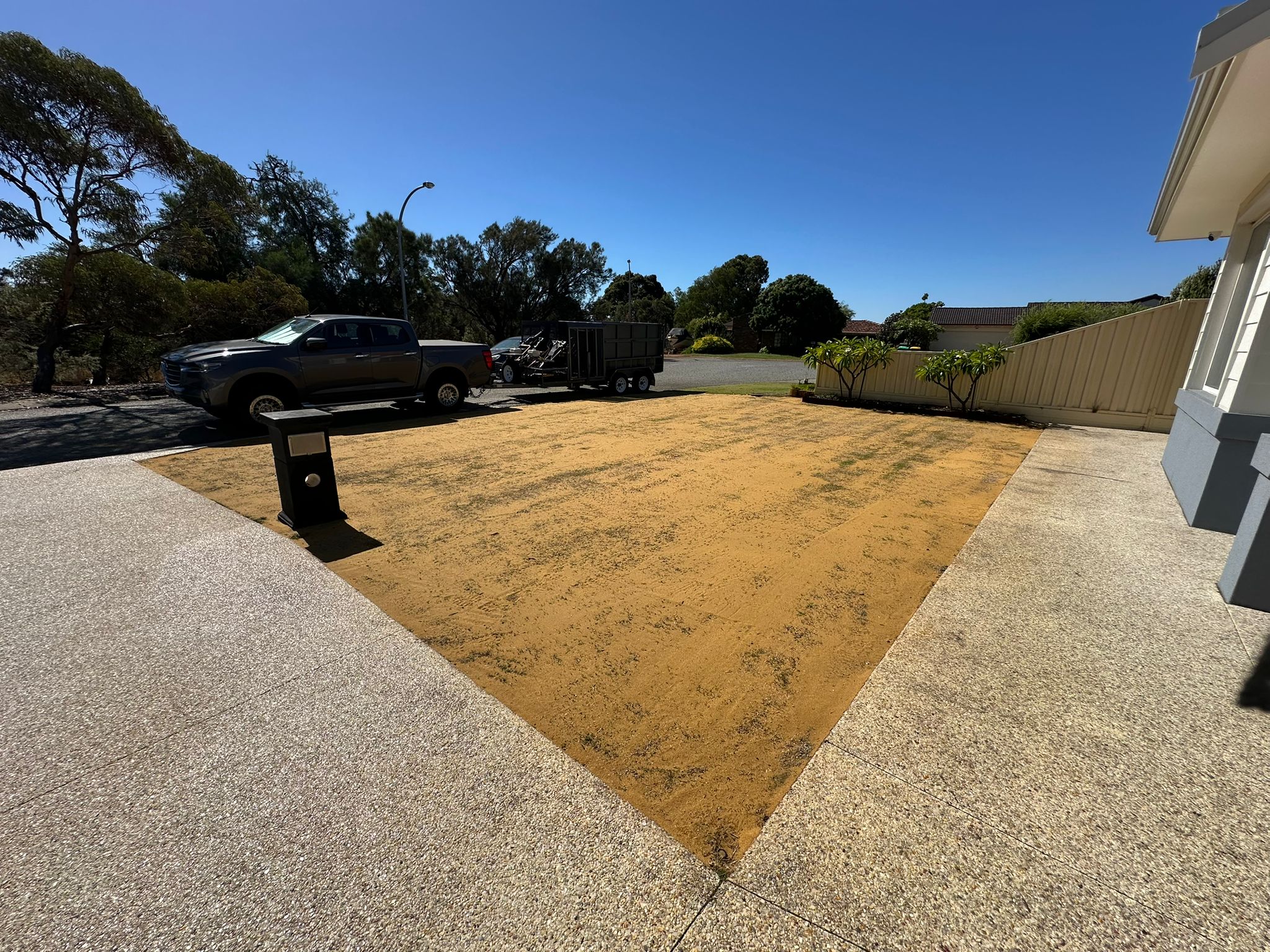
None of the above matters if the delivery is off. Before the heat arrives, run every station manually and watch it work. Look for heads that don't pop, heads throwing water at fences and paving, and dry gaps between arcs where two sprinklers should overlap.
Most of the dry patches we get called out to in January were visible in September as a crooked sprinkler head.
The short version
Two days a week is enough. Water deeply on your rostered days rather than lightly and often, fix the water repellency so it actually soaks in, open up the compaction, build the soil so it holds a drink, and make sure the retic is putting water where you think it is.
Do those five things and the roster stops being the reason your lawn struggles.
Or hand it over. Tell us about your lawn through the quote form and we'll reply within one business day with a watering and care plan tailored to your turf, not a template.
Want your lawn handled properly?
Get a free, no-obligation quote and we’ll get back to you, usually within one business day.